
Can You Microwave Frozen Pizza? (Get Perfect Pizza without the Oven)

These days, frozen pizza is more than a convenience – you can get high-quality pies with mouth-watering topping options and crusts for just about any dietary restriction. But, is it a good idea to microwave a frozen pizza?
It is possible to microwave a frozen pizza. An 8-9″ pizza should only take 4-6 minutes at full power. However, microwaved pizza won’t have a crispy crust and may be soft and soggy or hard and dry. For best results, use microwave-safe stoneware. Frozen pizza can also be cooked on the stovetop, grill, or in an air fryer in the absence of an oven.
In this article, we’ll guide you towards the best flavors possible when microwaving your favorite frozen pizza, plus some great tips and alternatives!
Can you microwave frozen pizza?
While frozen pizzas have been around almost as long as single-serving pot pies and frozen meat-and-3 dinners, they haven’t experienced a similar revolution. With a few exceptions, the directions for cooking frozen pizzas are still oven-oriented. That being said, it is possible to cook a frozen pizza in a variety of ways – including in the microwave.
You can microwave frozen pizza, although it takes extra effort to make it as crisp and delicious as the manufacturer intended. When you heat a frozen pizza in the microwave, it can become soft and soggy, rubbery and chewy, or dry and hard. It is also likely that the pizza will be unevenly heated, with some spots being unpleasantly hot while others remain cold.
In the 1950s, frozen foods of all varieties were experiencing mass market appeal, with ads showing families sitting down in front of the tv with their frozen dinners. While these early packaged meals were originally heated in the oven, the popularity of the microwave quickly saw a pivot to microwavable meals.

If your frozen pizza includes directions for heating it in the microwave, use those. Otherwise, keep reading full a complete breakdown of the times, settings, and top tips for microwaving your favorite frozen pizza.
Is microwaving frozen pizza bad?
Now that we’ve established that you can microwave frozen pizza, it begs the question: should you?
While you can cook frozen pizza in the microwave, the resulting flavor and texture won’t be as good as an oven. The end results always tend to be a disappointing chewy crust, uneven temperature throughout, and downright greasy cheese.
To understand why microwaving pizza is bad, you need to understand how it warms the frozen pizza.
Microwaves are designed to heat food through radiation instead of heat. The emitting radiation transfers the molecules in the food, causing the food to warm up. Moreover, the water in the food is energized to convert into steam. And, this condensed steam can result in the food being soggy, overly dry, or brunt.
So if you like your pizza crispy and cooked to perfection, you should use an oven to cook your pizza on either a baking sheet, a pizza stone, or directly on the oven shelf.
Another reason is that microwaving pizza tends to melt the sugar molecules present in the dough. And when the slice cools down, the molecules become hard, making your crust overly hard.
How do you defrost a pizza in the microwave?
Frozen pizzas come in different sizes, shapes, and topping variations. You can microwave them each with the right method.
Defrosting frozen pizza in the microwave is fairly easy and it only takes a couple of minutes. Remove the packaging and plastic wrap. Slide the pizza off its cardboard base and onto a microwave-safe dish. Use the defrost setting on your microwave or reduce the power to 20-30%. Heat for just a few minutes at a time, checking between each stage.
The time and temperature you choose to defrost can make or break your pizza, even if you finish in the oven so make sure you don’t try to go too high or too fast.
All that being said, most frozen pizzas can be cooked directly from the freezer and don’t need to be thawed. Check your pizza’s cooking directions – chances are the time and temperature already take that into account.
How long do I cook a frozen pizza in the microwave?
If your frozen pizza of choice doesn’t come with instructions for heating in the microwave, there are some basics you can keep in mind.
Depending on the size of your crust, you only need 8 to 15 minutes to cook your frozen pizza at full power. Additional toppings mean your pizza will take longer.
Modern microwaves may include a pizza setting. It’s worth noting that this is very helpful for reheating pizza but isn’t useful for heating directly from frozen.
What temperature do I microwave a frozen pizza at?
Most frozen pizza boxes direct hungry pizza lovers to put the pizza in the middle of a pre-heated 450°F oven. What does that mean if you’re microwaving your meal?
If you’re looking for the best-tasting pizza possible from your microwave, go slow. Heating the pizza at around 50% power will help keep the pizza crust from becoming tough and unpleasant and allows for a more even distribution of heat and a more consistently warm pizza.
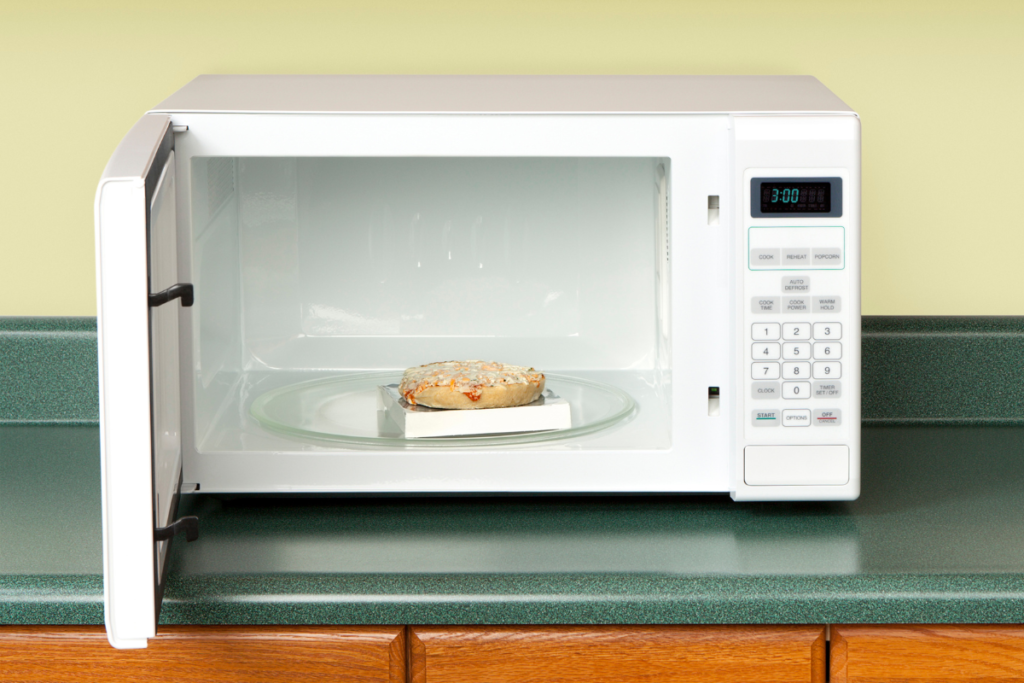
It is still possible for the steam to lead to a soggy crust and unappetizing texture. You may want to try putting a paper towel beneath the pizza to absorb some of the moisture or investing in a microwave-safe warming platter.
How to cook a frozen pizza in the microwave
Cooking a frozen pizza in the microwave is an easy task. Making it taste great requires a bit of additional work.
To cook a frozen pizza in the microwave, here are the steps:
- Remove the packaging and plastic wrap
- Slide the pizza off the cardboard packing tray and onto a microwave safe dish
- For best results, reduce the Power Level to 50%
- Microwave the pizza until warmed through
- Remove carefully from microwave – some parts of the pizza may be much hotter than others.
If your frozen pizza includes directions for how long to heat for, use those. Otherwise, here are some general heating instructions:
| Size | Time | Power Level |
|---|---|---|
| Slice | 1-2 minutes | High |
| Mini pizza pack | 3-5 minutes | High |
| French bread pizza | 7-8 minutes | High |
| 8″-9″ pizza | 4-6 minutes | High |
| 10″-11″ pizza | 5-7 minutes | High |
| 11″-12″ pizza | 7-11 minutes | High |
Can you microwave frozen biscuits?
Can you cook frozen DiGiorno pizza in the microwave
With a tagline like “It’s not delivery…” you’re expecting something great when you bite into a DiGiorno pizza! But can you microwave a frozen DiGiorno pizza and still get that same great taste?
All DiGiorno personal-size pizzas and pizza bites can be heated in the microwave and come with instructions on the box. The brand does not recommend heating the full-size pizzas this way and limits directions to a conventional oven.
DiGiorno cooking instructions for all pizzas are available on the website. Select Personal Pizzas and follow the time and temperature directions in Step 4.
While DiGiorno does not recommend microwaving their larger frozen pizzas, you can try doing so using the general guidelines outlined above.
Can you cook frozen Freschetta pizza in the microwave
Freschetta frozen pizzas are made with high-quality ingredients and feature the kinds of toppings and crusts you’d enjoy at a nice Italian eatery. Many consumers have noted that Freschetta pizzas are especially good when cooked on a grill, but what kind of results might you get from a microwave?
Frechetta only provides directions for cooking pizzas in a conventional oven. Because of the pizza’s unique square shape, it is not a particularly good candidate for microwaving whole as it is unlikely to fit in most consumer microwaves.
If you’re feeling daring, it may be worth noting that Freschetta once offered a (now discontinued) by-the-slice option that was meant to be microwaved. It may be possible to cut your frozen Freschetta pizza and microwave it in a similar manner. Admittedly I haven’t attempted this method, but I’d recommend starting at 50% power and about 2 minutes.
Can you cook frozen Tombstone pizza in the microwave
Tombstone is a reliably middle-of-the-road frozen pizza brand – will it microwaving it provide similarly middle-of-the-road results?
As with most full-size frozen pizzas brands, Tombstone recommends cooking its pizzas in a conventional oven. Depending on the size of your microwave, the standard 11” pizza may not fit.
As with other frozen pizzas, you can follow the general guidelines listed above, although, in the words of one Redditor, “it will be sad. it will make you sad.”
Top 5 tips for microwaving frozen pizza
Let’s be honest – microwaving a frozen pizza probably isn’t your cooking method of choice. Maybe you don’t have access to an oven, maybe you’re in a hurry, and maybe you just don’t want to turn on the hot oven in the middle of summer.
No matter the reason, you’ve found yourself willing to compromise on the cooking method for your pizza slices – here are the tricks.
To get the most out of your microwaved pizza, try implementing one or more of these ideas:
- Go slow – If you have the time, lower the Power Level to about 50% and microwave the pizza a few minutes at a time, checking between stages. This will allow the pizza to heat more thoroughly and keep the crust from becoming too hard.
- Add a bit of water – Placing a small mug of water in the corner of the microwave can help keep the pizza from drying out while it’s heating. This is particularly helpful when reheating pizza, but can be useful if you’re heating a slice on high power.
- Finish in a hot pan – Assuming you have a stovetop available, you can microwave the pizza most of the way, then slide it into a heated pan. This will help crisp up the bottom of the pizza crust.
- Use a microwave-safe rack – This multipurpose microwave-safe rack will allow moisture to escape instead of building up and leaving you with a soggy crust.
- Buy a microwave crisper pan – If you’re going to be microwaving frozen pizza regularly, it’s probably worth picking up a crisper pan – it’s good for more than just pizza! Do a little bit of research and find that pan that fits best in your microwave, but do make sure it’s microwave safe!
Other ways to cook frozen pizza
Most frozen pizzas are made with conventional ovens in mind, but there’s more than one way to skin a cat. Or, in this case, more than one way to heat a pizza slice.
Some non-conventional appliances for cooking a frozen pizza include:
- Stovetop
- Grill
- Air fryer
Basically, you can cook a frozen pizza in just about any way that lets you apply heat.
Stovetop
While it may not be helpful if you don’t have access to a range at all, there are many reasons you may prefer to cook your frozen pizza on the stovetop rather than inside the oven.
To cook your frozen pizza on the stovetop:
- Start with a defrosted pizza. Take the pizza out of the freezer and allow to sit on the counter for about an hour.
- Heat up a cast-iron skillet to medium-high and add 1 tablespoon of olive oil. Cast iron is the best choice for this because of how well it holds heat. Ceramic or stainless steel pans will lose their heat too quickly.
- Remove the package from the frozen pizza. Slide it off the cardboard backing and into the skillet. Ideally, the pizza will fit into the base of the skillet.
- Reduce the heat to medium and cover the pan with a clear lid.
- The pizza will be ready when the crust appears crispy and slightly golden brown.
- Remove the skillet from the heat – do not remove the lid. Let the pizza rest for 1-2 minutes before removing it from the skillet.
Grill
Cooking your pizza in the oven is the most practical way, but have you ever tried it off the grill? It’s about as close as you can get to brick-fired pizza without actually having a brick oven.
To cook your frozen pizza on the grill:
- Preheat the grill to high heat for at least 15 minutes.
- Remove the package from the frozen pizza. Carefully slide it off the cardboard backing and directly onto the grates.
- Reduce the grill heat to medium.
- Cover and cook for 10-12 minutes. The cheese will be melted and the crust will just be starting to char.
- Remove from the grill grates with a large metal spatula and tongs.
- Allow to cool for a few minutes before serving.
Air fryer
If you have an air fryer, chances are you already know how many surprising things you can do with it, but did you know that cooking frozen pizza is on that list?
To cook your frozen pizza in an air fryer:
- Remove the package from the frozen pizza. Carefully slide it off the cardboard backing and onto the rack.
- Set the air fryer to 380-400°F.
- Cook for 6-10 minutes. The time will vary based on the size and thickness of the pizza.
- Remove from the air fryer and allow to cool for a few minutes before serving.
Most air fryers will only be big enough to heat a personal-size pizza, but it’s definitely worth a try if you have one!
Now that you know you can cook frozen pizza in the air fryer, check out these other 11 frozen foods!
Final thoughts
Pizzas have become a staple food item in every household. And, thanks to frozen pizzas, people can just store this delicious food in their freezer and eat it whenever they want.
While microwaving is not generally recommended to cook or reheat a pizza, the right methods and a little bit of patience can yield a delicious slice without the use of a conventional oven.
Let Us Know How We’re Doing!
Did this expertly prepared resource answer your question?
Do you have another question about home maintenance, home improvement projects, home appliance repair, or something else?
Get more information, send in questions and keep the discussion going by contacting the I’ll Just Fix It Myself company customer service team at at 1-800-928-1490 or Email us at [email protected]
