
Is a 700 Watt Microwave Any Good? [Plus How to Convert Cook Times]

Microwaves are a nearly indispensable appliance in most kitchens, but it’s also one of the easiest to downgrade without suffering any major inconveniences. Sure, that big 2.2 cu. ft. microwave is nice, but it’s also taking up a huge chunk of your kitchen counter. If you’re thinking of downsizing your microwave, you’ve probably stopped to wonder, “Is a 700-watt microwave any good?”
A 700-watt microwave is good for heating small amounts of food, and most models can easily handle a 10″ dinner plate. It has a relatively small footprint and a good for smaller kitchens but will require longer to heat food than larger microwaves. To convert cook times, multiply the expected wattage by the recommended cook time and divide by 700.
Keep reading to find out all about 700-watt microwaves, including what you can cook in them, and how to convert cook times for more powerful microwaves.
Is a 700-watt microwave good enough?
Most home microwaves fall into the 800-1,000 watt range, but not everyone needs a big microwave. If you’re working with limited space or simply don’t plan on using your microwave regularly, you might prefer to get a smaller, less powerful unit. Would a 700-watt microwave cut it?
A smaller 700-watt microwave is excellent if you only plan on reheating leftovers or heating food up for short periods of time. If you want to use your microwave for defrosting, cooking, or other high-power uses, you’ll want to invest in a higher-power unit.
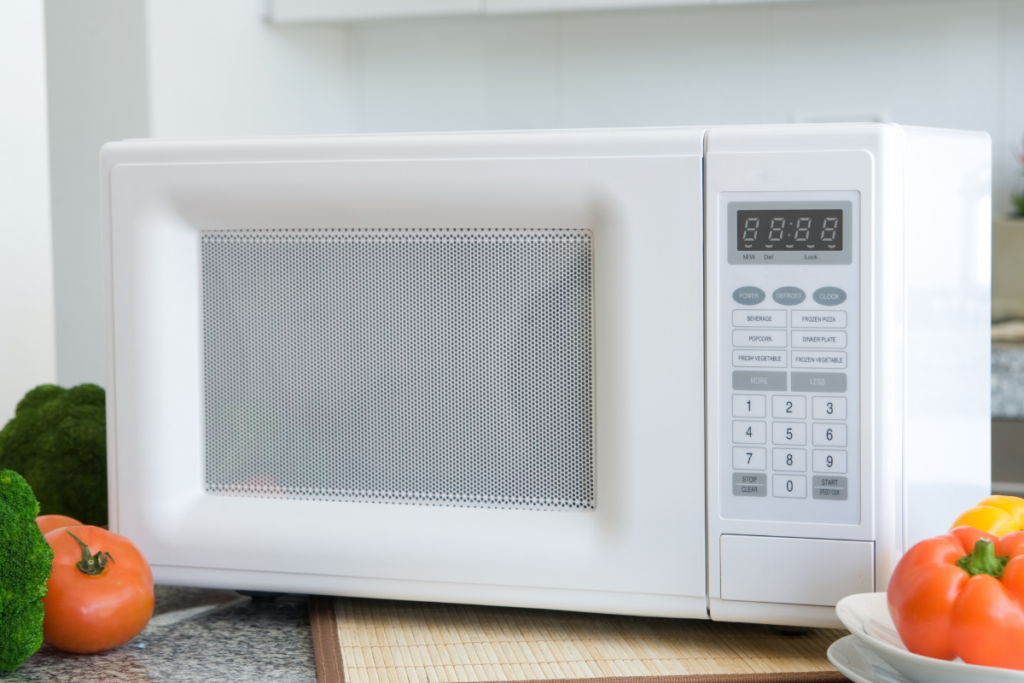
Seven hundred watts is more than enough to reheat last night’s dinner, pop a bag of microwave popcorn, or even melt some chocolate – it’ll just take a little bit of patience.
Did you know you can also cook a frozen dinner in a 700-watt microwave? Find out what you need to do!
How big is a 700-watt microwave
Space available is a huge deciding factor when it comes to buying a new microwave. Does it need to be as small as possible to avoid taking up your already limited counter space, or are you trying to fill a pre-existing space?
A 700-watt microwave is one of the smallest available, typically 0.7 cu. ft. This size refers to the space inside the microwave. The exterior size of the appliance may vary by several inches in any direction.
The smallest microwave currently available is the 0.5 cu. ft. Whirlpool Countertop microwave – it does offer 750 watts of cooking power, so looks can be deceiving! The largest home microwaves tend to be more like 1,100-1,200 watts.
Does a 700-watt microwave fit a dinner plate?
One of the most common uses of your microwave is going to be reheating meals, so it’s going to be important to know if your dinner plates will fit before making a purchase.
Most 700-watt microwaves will fit a round 10” dinner plate, although you’ll need to consult the interior dimensions to be sure. One of the best ways to tell is by referencing the size of the glass turntable inside the microwave – if it’s the same size as your plate, you’re good.
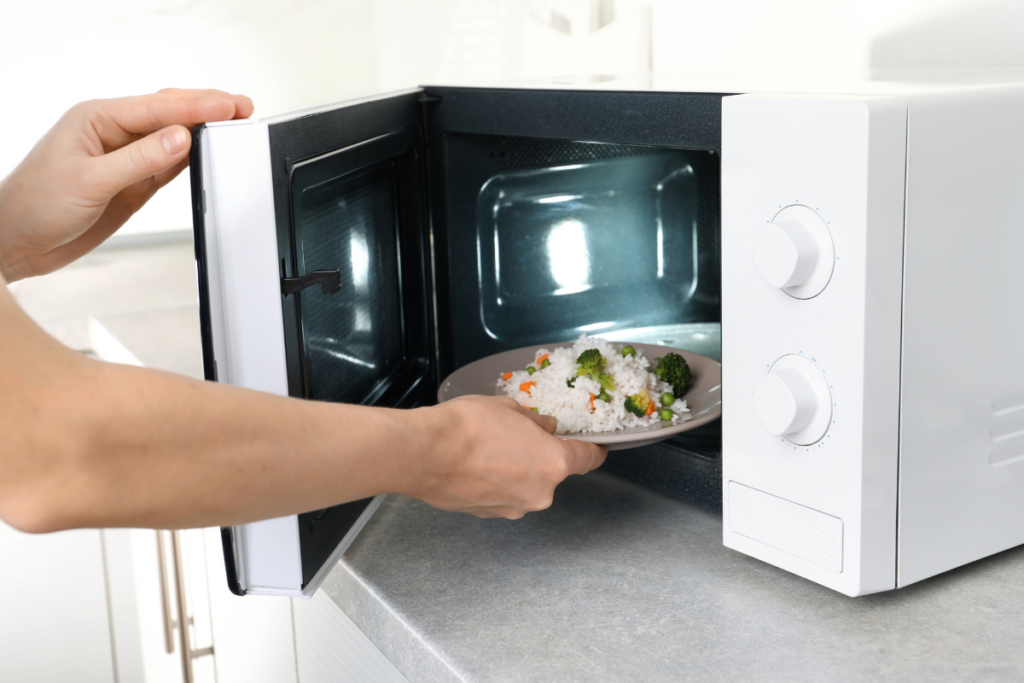
Dinner plate sizes have grown significantly over the last several decades. Just a quick search of currently available sets yielded 10.25”, 10.5”, 10.75”, 11” round plates, 10.5” square plates, and even 11” oval plates.
| Microwave | Wattage | Volume | Turntable Size |
|---|---|---|---|
| GE | 700 | 0.7 cu. ft. | 10.75” |
| Haden | 700 | 0.7 cu. ft. | 9.5” |
| Insignia | 700 | 0.7 cu. ft. | 10” |
| Cuisinart | 700 | 0.7 cu. ft. | 10” |
Dinner plates vary in size and shape, and even microwaves of the same general power levels vary in capacity, so it’s important that compare dimensions yourself. There should be enough space around the plate to allow it to rotate freely while the microwave is on.
How much power does a 700-watt microwave use?
A 700-watt microwave uses less power than standard microwaves, and generally less than other home appliances.
Most 700-watt microwaves actually have a power input of 1,050 watts. You can figure out the amount of power the microwave uses by multiplying that wattage times the amount of time used.
For example, a microwave with a power input of 1,050 watts that is used for 15 minutes each day will use about 262 Wh (watt hours) each day.
Wattage (W) * Run time (h) = Power used (Wh)
1,050W * .25h = 262.5Wh
Once you know that number, you can use it to find out exactly how much your microwave costs to run. First, convert your daily usage to kilowatt-hours, then multiply by the cost of electricity. If you have your power bill on hand, you can use the specific cost of electricity or just use the cost of electricity by state.
(Wh / 1000) * Average Price (cents/kWh) = Daily cost of running your microwave (x)
(262.5/1000) * 12.96¢
0.2625 * 12.96¢
3.4¢
This means it costs about 3.4¢ per day (or a little over a dollar a month) to run your 700-watt microwave.
As with any other electronic device, a 700-watt microwave with a clock will use energy when plugged in, even if it’s not in use; however, that amount is likely to be negligible.
How much longer does a 700-watt microwave take to cook
One of the tradeoffs of choosing a less powerful microwave is that it will take longer to cook or heat your meals. How long are we talking?
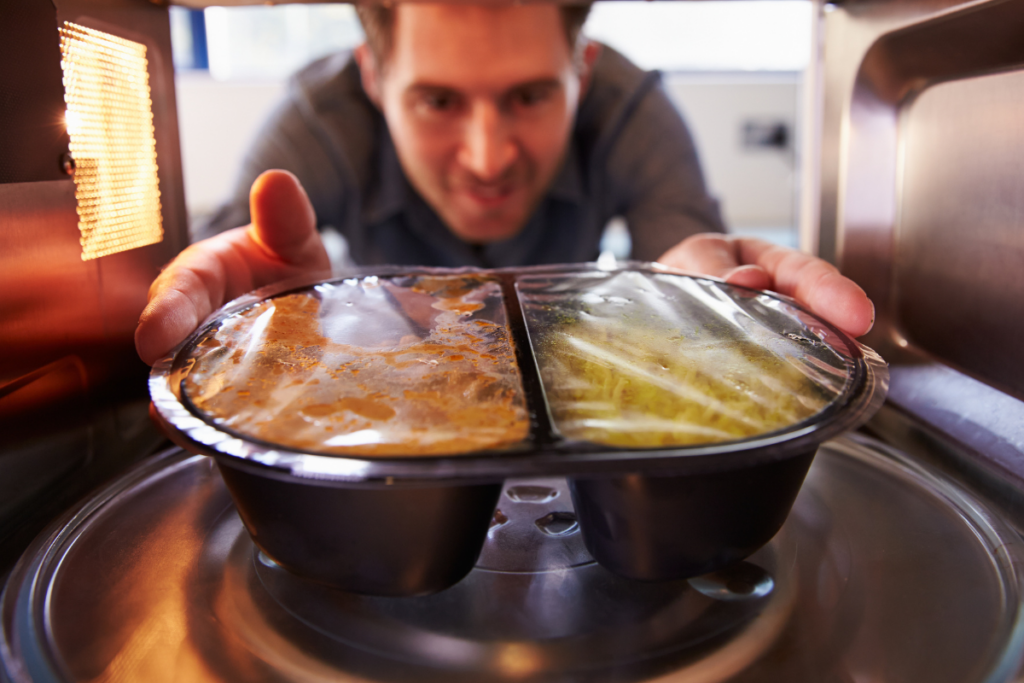
Most frozen dinner instructions assume an 1100-watt microwave for projected cook times. Because your 700-watt microwave only has about 64% of the cooking power, it’ll take about 64% longer to cook your meal.
While that may sound complicated, it’s actually pretty easy to convert and you’ll be a pro at cooking in your 700-watt microwave in no time!
Top tip: A lower powered microwave can mean food takes longer to heat. Here are five other reasons your microwave might be taking longer than expected!
How to convert cooking times for a 700-watt microwave
Most recommended microwave cooking times are developed for 1,100-watt microwaves.
To convert cooking times from an 1,100-watt microwave to a 700-watt microwave, multiply the recommended cook time by the expected wattage. This will give you the amount of power required to heat the meal. Divide that by 700 (or the output wattage of your microwave). This will be your new cook time.
For example, a Stouffer’s single lasagna package recommends that it be cooked for 4 minutes, rotated, then cooked for 4 more minutes before being allowed to sit.
4 minutes = 240 seconds
240 seconds * 1,100 Watts = 264,000 Ws
254,000 Ws / 700W = 377 s
377 seconds = 6 minutes 17 seconds
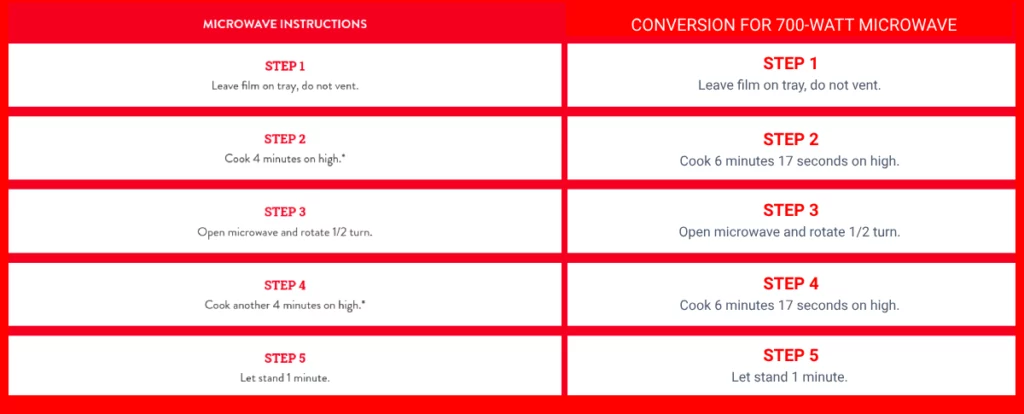
This means you’ll want to cook the frozen lasagna for 6:17, rotate it, and cook for another 6:17. The reset time will stay the same.
Is your microwave burning food? I’ve got the top reasons, but three ways to fix the problem!
Final thoughts on 700-watt microwaves
A 700-watt microwave is a solid choice if you don’t plan on doing intense cooking in your microwave or if you have limited space.
Most 700-watt microwaves can perform the basic functions of a microwave as well as larger versions, although they will take longer to do so. Most models can fit a 10” dinner plate or a bag of popcorn, although they won’t have as many pre-programmed settings or cook options as higher-end models.
To convert a manufacturer’s recommended cook time, multiply the time (in seconds) by the wattage used on the packaging (usually 1,100), then divide by 700. That will give you the converted cook time in seconds.
Let Us Know How We’re Doing!
Did this expertly prepared resource answer your question?
Do you have another question about home maintenance, home improvement projects, home appliance repair, or something else?
Get more information, send in questions and keep the discussion going by contacting the I’ll Just Fix It Myself company customer service team at at 1-800-928-1490 or Email us at [email protected]
