
9 Kohler Toilet Problems & Troubleshooting (Flush, Flapper, Filling, & More)

It’s easy to overlook your toilet when it’s functioning properly and mostly clean, but it’s hard not to notice when something starts to go wrong. Are you looking for a Kohler toilet troubleshooting guide to get your bathroom back on track?
The problems you will likely have to troubleshoot in a Kohler toilet include leaky valves, continuous running, water pressure, and insufficient water in the bowl. Start by determining the problem with the toilet and work through the top causes. Most problems will be able to be solved with a little bit of time and a quick trip to the hardware store.
Keep reading to identify exactly what’s going wrong with your toilet and exactly what you should do to fix it!
9 common problems with Kohler toilets (and their solutions)
Kohler is one of the top brands for toilets, faucets, and all other things bathroom, so chances are pretty good you’ve got one in your home and you’re probably pretty happy with it overall. So what do you do when your toilet stops working properly?
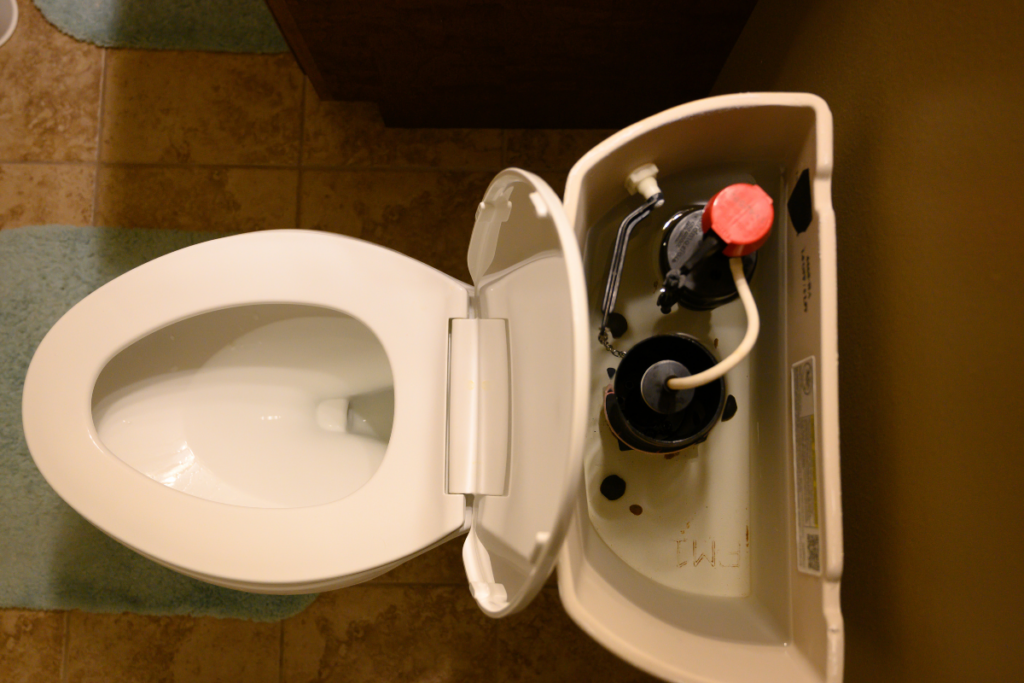
When it’s time to troubleshoot your toilet, the problem likely falls into one of these categories:
- Toilet clogged
- Toilet clogs frequently
- Toilet not flushing
- Toilet not flushing completely
- Toilet running when not in use
- Toilet takes too long to refill
- Toilet is noisy when refilling
- Toilet not shutting off
- Toilet bowl doesn’t have enough water
| Problem | Recommended fix |
|---|---|
| Toilet clogged right now | Use a plunger or chemical drain cleaner to unclog the trapway, siphon jet, or drainline |
| Toilet clogs frequently | Unclog your toilet with a small snake or a toilet auger |
| Toilet not flushing at all | Ensure the trip lever chain is connected to the handle and adjust its length for proper slack |
| Toilet not flushing completely | Adjust the trip lever chain, adjust the water level, remove obstructions in the waste line, jet, or trapway, ensure the hose is connected to the canister’s top, and check the rod length. |
| Toilet running when not in use | Replace or clean the seal or adjust the toilet chain and water level |
| Toilet is not shutting off | Clean or replace the fill valve, adjust the tank’s water level, or adjust the trip lever chain |
| Toilet bowl doesn’t have enough water | Make sure the rim feed hose in your toilet tank is joined to the flush valve |
| Toilet takes too long to refill | Open the shut-off valve completely, ensure the canister or flapper sit well after a flush, and clean the seat washer/fill valve seat or fill valve inlet. Your water should also be debris free. |
| Toilet is noisy when refilling | Clean the fill valve, ensure the rim feed hose connects to the fill valve and the overflow, or get a replacement fill valve |
Once you’ve identified the primary problem, work your way through the fixes I’ve recommended below. Depending on the issue, you may need to run out to the local hardware store to pick up a replacement part.
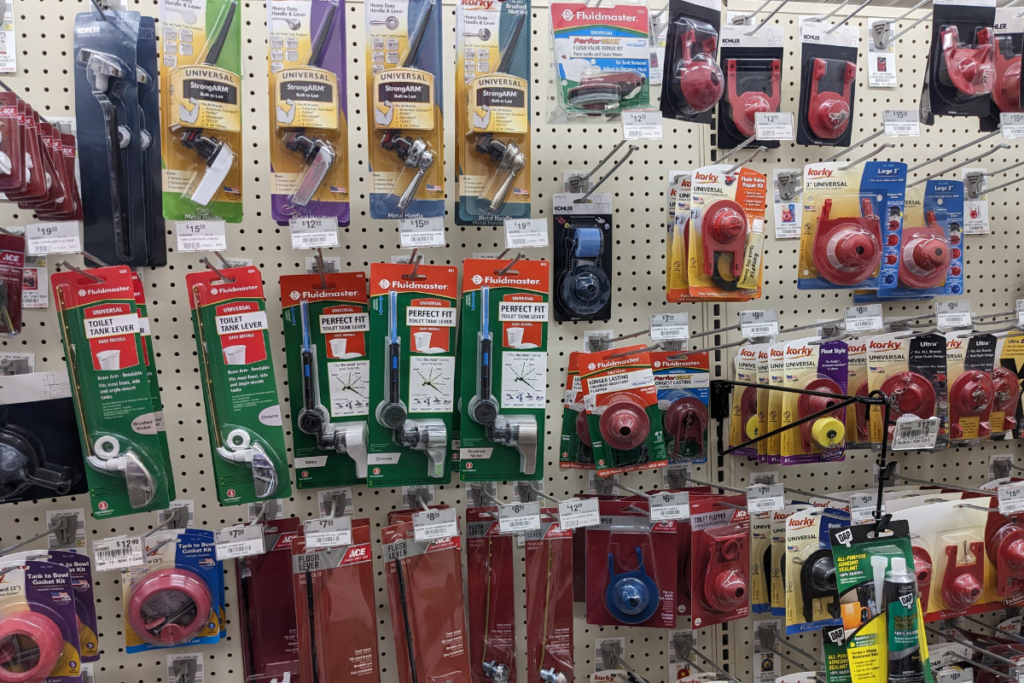
If you do need a replacement, make sure you find the one that’s made for your model Kohler toilet! Everything in the plumbing aisle may look interchangeable, but that’s not always true.
Toilet is clogged right now
The most obvious problem with your toilet is a clog – even if you’re having trouble removing it, there’s a good chance you’re aware it’s there.
To fix a clogged toilet, unclog the trapway, siphon jet, or drainline.
There are several ways to unclog a toilet, but you need to be careful what order you try them in!
How to fix a toilet that is clogged right now
Start by attempting to remove the clog with a toilet plunger. If you only have one plunger, it’s probably the kind that has a red dome at the end of a wooden handle – don’t use this one.
A toilet plunger has a smaller flap at the bottom of the cap to ensure a good seal. The better the seal, the more air will be pushed into the drain, and the more likely the clog will be dislodged. Some toilet plungers also have a “beehive” or accordion structure, allowing them to push significantly more air.
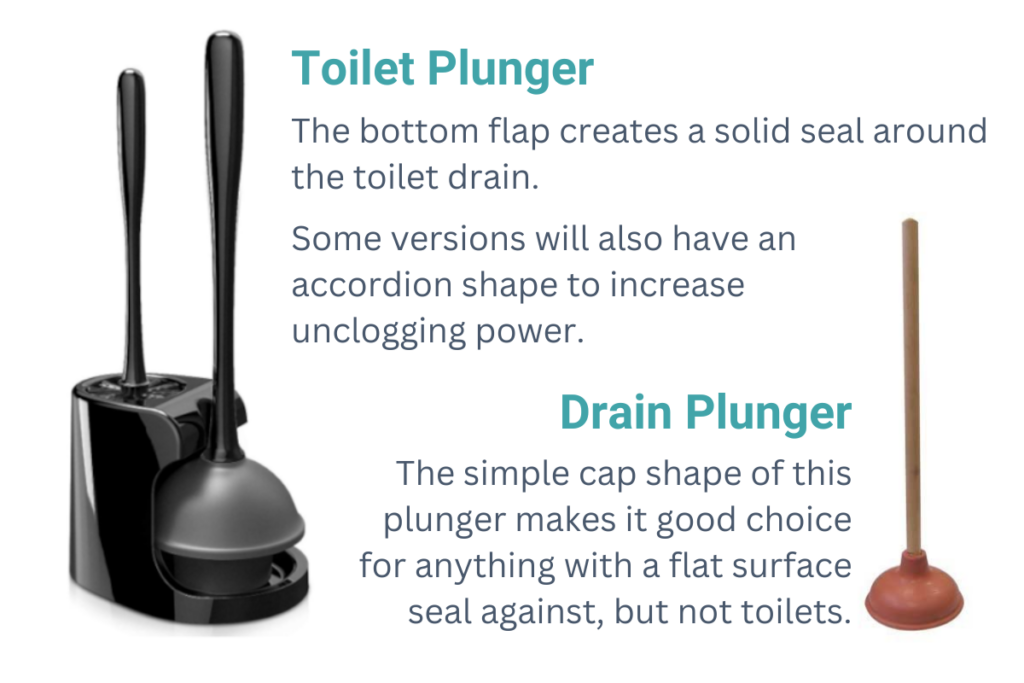
If the plunger doesn’t work, you may want to try a drain cleaner or a plumbing snake (also called a drain augur). The order is important here! You can use the augur to loosen the clog and then use a chemical drain cleaner to flush it entirely, but you should not use the drain cleaner before either plunging or snaking as you could cause the chemicals to splash back on you.
Toilet clogs frequently
Clogging is an issue you will often encounter if you use too much toilet paper in a one-piece Kohler toilet.
Protect your toilet from clogs by not flushing certain items, including menstrual products, condoms, baby wipes, hair, cat litter, and gum.
If you discover your toilet is clogged, check the waste line, jet, or trapway for obstructions.
How to fix a toilet that clogs frequently
Frequent clogging typically means there is an obstruction in the line that is causing the toilete to drain slowly.
You can rid your Kohler toilet of obstructions using a drain snake. Alternatively, use a plunger, but ensure you pick the right one.
Typically, cup plungers are used for unclogging sink and bathtub drains. On the other hand, flange plungers are better suited for toilets due to their smaller mouths and larger internal cavities.
Toilet is not flushing at all
Your toilet is a truly indispensable household fixture, especially if you only have one bathroom. What do you do if it suddenly stops flushing?
Your Kohler toilet isn’t flushing because the trip lever has too much slack or is disconnected from the handle.
This problem will be apparent because you won’t feel any resistance in the handle when you try to flush the toilet.
How to fix a toilet that is not flushing at all
Before you visit your local hardware store, check to see if the flush handle has broken or has simply become disconnected.
Lift the top off the toilet tank and place it somewhere safe.
Look inside the tank while depressing the handle. There should be a long piece of plastic that connects the handle to the flapper. If the chain has disconnected, just hook it back onto the plastic and ensure depressing the handle now lifts the flapper, draining the toilet.
If the toilet still isn’t flushing, you’ll need to replace the handle. Never fear! It isn’t hard at all.
To replace a toilet flush handle on a Kohler toilet:
- Buy a replacement. When you visit the hardware store, you’ll see that there are many different options for replacement toilet handles. Kohler recommends you purchase the original equipment manufacturer (OEM) part – aka the one they sell – but you can also find the generic handle that is made to fit your Kohler toilet.
- Remove the tank lid. The lid is heavy porcelain and will break if dropped (and probably break something else in the process) so put it somewhere safe and out of the way. I usually just put it down inside the bathtub.
- Disconnect the chain from the trip lever. The trip lever is the long plastic bar that extends from the back of the handle. If your toilet isn’t flushing, chances are this piece has broken off of the handle and is lying at the bottom of the tank. Take note of which hole the chain is connected to.
- Unscrew the flush handle. Hold the handle firmly and unscrew the plastic nut on the inside of the tank. You will probably be able to do this without a wrench.
- Remove the broken flush handle. Ensure that the exterior handle, the nut, the washer (this should be between the nut and the porcelain), and the trip lever are all removed from the toilet tank and thrown away.
- Insert the replacement handle. Remove the plastic washer from the handle. Insert the handle through the front of the toilet so that the trip lever extends into the toilet and sits several inches directly above the flapper.
- Connect the handle. Slide the washer down the length of the trip lever so it is against the interior of the tank. Slide the nut next and twist it on. This should be snug, but over-tightening can crack the porcelain.
- Attach the chain. Connect the chain to the same hole you noted earlier. This controls how high the flapper lifts when you flush.
- Test. Flush the toilet, observing the bowl. It should drain completely and then stop running once the tank is full. Once everything is working properly, put the lid back on.
Top tip: It’s perfectly safe to put your hands in the back of the tank. The tank may be discolored from water sitting in it, but the water itself is just as clean as the water that comes out of the sink.
Toilet not flushing completely
Now that you know how to replace the handle and trip lever if your Kohler toilet isn’t flushing, it’s easy to address the problem if it’s not flushing completely.
Most times when your toilet is not flushing completely, the problem is with either the trip lever or the chain length, although it may also want to check the water level. It may also be a sign that there is a clog developing or that the rim holes are blocked.
Fortunately, the fix for each of these issues is fairly straightforward.
How to fix a toilet that is not flushing completely
While there are several issues that could be causing your Kohler toilet not to flush completely, they are simple to check and shouldn’t take too long to diagnose and correct.
Your Kohler toilet not flushing completely typically means that the chain connecting the trip lever to the flapper is in the wrong hole. To fix this, you’ll just need to move the chain along the trip lever, testing at each length. The bowl should empty completely and the flapper should ensure that no water is escaping when the handle is not engaged.
Other possible reasons your toilet might not be flushing completely include:
- Trip lever is the wrong length – If this can’t be solved by moving the chain along the length of the lever, you have the wrong part. Be sure you get one made for your toilet.
- Water level is off – The water should always refill to the waterline. If it’s not, turn the adjustment screw counterclockwise.
- Minor clog – Remove obstructions from the waste line, jet, and trapway.
- Blocked rim holes – Clean the rim holes beneath the rim of the toilet.
Toilet is running when not in use
You should only hear the water in your toilet when you flush it. Running when not in use is annoying, but it’ll also drive up your water bill.
A toilet that is running when not in use is typically a sign that the flapper or seal has worn out.
You may also need to check the chain to ensure it’s not allowing a steady stream of water or lowering the water level.
How to fix a toilet that is running when not in use
Replacing a toilet flapper may sound intensive, but it’s actually an easy DIY project.
To replace the flapper on your Kohler toilet:
- Buy a replacement. Normally I’m a fan of generic replacement parts, but if you’re not ready to customize the generic part to fit your toilet, go for the Kohler one.
- Remove the tank lid. The lid is heavy porcelain and will break if dropped (and probably break something else in the process) so put it somewhere safe and out of the way. I usually just put it down inside the bathtub.
- Turn off the water to your toilet. There should be a valve either directly behind your toilet or at the wall. Rotate it clockwise until you can’t turn it anymore. Flush the toilet to test; with the water off, the tank will not refill.
- Disconnect the chain from the trip lever. The trip lever is the long plastic bar that extends from the back of the handle. Take note of which hole the chain connects to.
- Remove the old flapper. Lift the flapper off the side pegs. If your flapper is hard plastic rather than rubber, it may take a little more work but it shouldn’t be a struggle.
- Customize the flapper. If you opted for the generic flapper, follow the instructions on the package to prepare it for your toilet.
- Install the flapper. Insert the new flapper and ensure that it is connected the same way the previous one was.
- Attach the chain. Connect the chain to the same hole you noted earlier. This controls how high the flapper lifts when you flush.
- Turn the water back on. Turn the water shutoff valve counterclockwise. It should go all the way until you can’t turn it anymore.
- Test. Flush the toilet, observing the bowl. It should drain completely and then stop running once the tank is full. Once everything is working properly, put the lid back on.
Toilet is not shutting off
You don’t have to keep wasting water and money on a continuously running Kohler toilet when you can fix the problem.
Your Kohler toilet may not shut off because of any of the following parts:
- Fill tube
- Fill valve
- Float
- Flapper chain
- Valve seal/flapper
| Potential Cause | Fix |
|---|---|
| Fill tube | – If this fill tube is disconnected from the valve, reattach it – Ensure the tube is about an inch above the overflow tube’s rim – Check water flow from the fill tube into the overflow tube |
| Fill valve | – Remove fill valve cap to check for sediments – Flush diaphragm with water to remove debris – Adjust older style fill valve: Lower water level by moving adjustment clip down the float rod – Adjust newer style fill valve: Turn screw counterclockwise to lower water level – If problem persists, replace fill valve |
| Float | – Lower adjustable float if water spills into overflow tube – Refer to water level indicator on tank wall or flush valve – Adjust float and flush to check water level |
| Flapper chain | – Detangle or lengthen flapper chain if too short or tangled – Ensure proper attachment to rubber flapper and flush lever |
| Flapper | – Replace the flapper |
Once you identify the cause of the problem, it’s fairly easy fix.
The first step to fixing a Kohler toilet that won’t stop running is to find the cause of the issue.
Fill tube
Remove the lid of the tank to access the fill tube if you have an issue with the overflow tube.
Typically, the fill tube refills the toilet bowl after a flush by squirting sufficient water down the overflow tube when the tank is refilling.
If the fill tube malfunctions, it may not stop filling the tank.
How to fix
The fill tube is the small tube that runs from the fill valve to the overflow tube.
If you find the fill tube is disconnected, reattach it and push it into the fill valve, ensuring it perches approximately an inch above the overflow tube’s rim.
Also, make sure the water flows into the overflow tube from the fill tube.
Fill valve
The fill valve refills your toilet with water after every flush, so it must function properly to have a well-functioning toilet.
The constant running of a Kohler toilet can stem from issues with the fill valve. Debris or sediments may be lodged in the cap, the fill valve may be set too high, or it may be worn out.
Check for sediments in the fill valve diaphragm by removing the fill valve cap, then get rid of them by flushing the diaphragm with a steady water stream.
How to fix
The age of your toilet will determine what you have to do to repair the problem.
To adjust an older-style fill valve:
- Squeeze the adjustment clip (metal C-shaped clip) of the float valve.
- Lower the clip and, in turn, the water level by sliding the clip down the float rod.
- Flush your toilet to ensure the water level stops at the marked water line.
To adjust a newer style fill valve:
- Turn the screw attached to the float arm counterclockwise to lower the water level.
- Flush your toilet to ascertain that the water level stops at the marked water line and the issue is rectified.
If the problem persists after adjusting either kind of fill valve, replace it.
Float
The float controls the flush, but it can also cause the toilet to run continuously.
The adjustable float could be set too high resulting in the water spilling into the overflow tube and the fill valve not shutting off, causing your toilet to keep running.
Fortunately, Kohler toilets are usually designed with a water level indicator on the tank wall or flush valve.
How to fix
The first step to identifying your toilet’s float is identifying it. The float is on the same side of the toilet as the flush handle and moves up and down along a pipe when the toilet is flushed.
Lower your toilet tank’s water level by adjusting the float.
Afterward, flush the toilet to see if the water level stops at the set mark.
Flapper chain
The flapper chain connects the handle to the flapper, ensuring that that the flapper lifts when the toilet is flushed – at least that’s the idea.
If the flapper chain becomes tangled or is too short, it will prevent the flapper from closing properly.
This is basically the opposite of the flapper chain issue that causes the toilet not to flush at all.
How to fix
To determine if the flapper chain is the root of your problem, remove the top of the toilet tank and place it out of the way. The flapper should close completely without any impediment.
Ensure that the chain is properly connected to both the trip lever and the flapper. Increase the length of the flapper chain by moving the clasp to a setting further away from the handle. You may also shorten the chain by hooking the clasp through a different link.
Flush the toilet and observe as the tank empties and refills. Once the water reaches the fill line, it should stop until the toilet is flushed again.
Flapper
The last option is the flapper itself.
If your Kohler toilet is still running after checking the fill tube, the fill valve, the floater, and the flapper chain, it’s likely that your flapper is no longer creating a strong seal and it’s time for a replacement.
This piece will wear out eventually, but it’s a pretty simple task to replace it.
How to fix
Replacing the flapper on your Kohler toilet will only take a few minutes once you’ve got all the pieces ready to go.
To replace the flapper on your Kohler toilet:
- Buy a replacement. Normally I’m a fan of generic replacement parts, but if you’re not ready to customize the generic part to fit your toilet, go for the Kohler one.
- Remove the tank lid. The lid is heavy porcelain and will break if dropped (and probably break something else in the process) so put it somewhere safe and out of the way. I usually just put it down inside the bathtub.
- Turn off the water to your toilet. There should be a valve either directly behind your toilet or at the wall. Rotate it clockwise until you can’t turn it anymore. Flush the toilet to test; with the water off, the tank will not refill.
- Disconnect the chain from the trip lever. The trip lever is the long plastic bar that extends from the back of the handle. Take note of which hole the chain connects to.
- Remove the old flapper. Lift the flapper off the side pegs. If your flapper is hard plastic rather than rubber, it may take a little more work but it shouldn’t be a struggle.
- Customize the flapper. If you opted for the generic flapper, follow the instructions on the package to prepare it for your toilet.
- Install the flapper. Insert the new flapper and ensure that it is connected the same way the previous one was.
- Attach the chain. Connect the chain to the same hole you noted earlier. This controls how high the flapper lifts when you flush.
- Turn the water back on. Turn the water shutoff valve counterclockwise. It should go all the way until you can’t turn it anymore.
- Test. Flush the toilet, observing the bowl. It should drain completely and then stop running once the tank is full. Once everything is working properly, put the lid back on.
Check out this article if your toilet is still leaking water even after installing a new flapper.
Toilet bowl doesn’t have enough water
Obviously the toilet water is necessary to ensuring your Kohler toilet functions properly, so what does it mean if the water level is low?
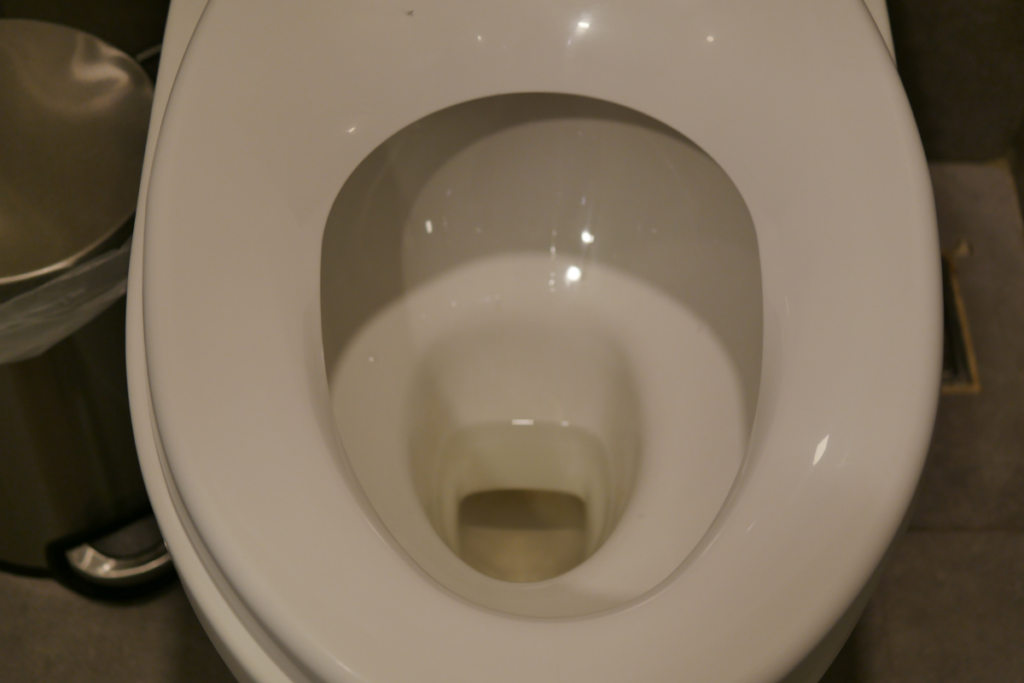
Low levels of water in your toilet bowl could be caused by not having enough water in the tank, a partial clog, blocked vent pipes, or a hairline crack in the toilet.
Since a toilet can’t function optimally without adequate water, it’s important to figure out exactly what’s causing the issue.
Do you know how to stop a toilet bowl from sweating? You will after you read this article!
How to fix a toilet bowl that doesn’t have enough water
Before you can repair a toilet that doesn’t have enough water, you’ll need to identify exactly what the issue is.
Your toilet bowl may not have enough water because of:
- Low tank water level – Raise the water levels by turning the adjustment screw clockwise.
- Clogged toilet – Flush the toilet with vinegar and baking soda. Scrub around the underside of the toilet seat to ensure the rim holes are blocked.
- Hairline cracks in the tank or bowl – Replace the toilet
- Plumbing vents are clogged – Clean the plumbing vent (or hire a professional for this one!)
Toilet takes too long to refill
Your toilet bowl should be refilled almost immediately when you flush.
If your Kohler toilet tanks long to refill, check the position of the canister or flapper after a flush and inspect the seat washer or fill valve inlet for debris and dirt. Also, examine if the shut-off valve is fully open.
Depending on your water pressure, the tank should be refilled in about one minute. A longer refill time – especially if it’s changed recently – is a sign that there’s something wrong.
How to fix a toilet that takes too long to refill
A toilet that takes too long to refill may not be a problem if you live alone, but the moment other people start using the bathroom, you’ll wish you’d made this fix earlier!
To improve the refill time of your Kohler toilet’s tank, you should:
- Entirely turn on the shut-off valve to increase the water pressure.
- Ensure the canister or flapper seat is properly seated after every flush.
- Clean the seat washer/fill valve seat or fill valve inlet to remove debris.
- Make sure your water supply is free from debris.
Toilet is noisy when refilling
A noisy toilet may not be as big of a problem as a major clog or a water leak, but it’s probably pretty annoying!
A Kohler toilet may be noisy when refilling because the water pressure is too high, the fill valve has debris in it or has just worn out, or there is a gap between the fill valve and the overflow tube.
Chances are you’ll need to replace the fill valve for perfect silence when your toilet is refilling.
How to fix a toilet that is noisy when refilling
Before jumping into replacing the fill valve, check to ensure that the overflow tube is properly connected to the fill valve. Then try reducing the water pressure slightly at the shut-off valve.
If that doesn’t work, you’ll want to replace the fill valve:
- Buy a replacement. When you visit the hardware store, you’ll see that there are many different options for replacement toilet handles. Kohler recommends you purchase the original equipment manufacturer (OEM) part – aka the one they sell – but you should be able to find a generic fill valve that matches your toilet.
- Remove the tank lid. The lid is heavy porcelain and will break if dropped (and probably break something else in the process) so put it somewhere safe and out of the way. I usually just put it down inside the bathtub.
- Turn off the water to your toilet. There should be a valve either directly behind your toilet or at the wall. Rotate it clockwise until you can’t turn it anymore. Flush the toilet to test; the tank will not refill with the water off.
- Remove the old fill valve. Lift the fill valve off the base.
- Install the fill valve. Remove the new fill valve from the included base (if you observe damage to your existing base, you’ll need to replace that as well). Slide it onto the base inside the tank and snap it into place.
- Insert the refill hose into the overflow tube. The refill tube should not go below the water line.
- Turn the water back on. Turn the water shutoff valve counterclockwise. It should go all the way until you can’t turn it anymore.
- Test. Flush the toilet, then observe how long the tank takes to refill.
Let Us Know How We’re Doing!
Did this expertly prepared resource answer your question?
Do you have another question about home maintenance, home improvement projects, home appliance repair, or something else?
Get more information, send in questions and keep the discussion going by contacting the I’ll Just Fix It Myself company customer service team at at 1-800-928-1490 or Email us at [email protected]
