
Microwave is Hot on the Outside (What Should You Do?)

What happens when you reheat food and your microwave is hot on the outside? This is mostly normal, but an abundance of external heat can cause concern.
It’s normal that a microwave is hot on the outside during and after cooking or reheating when heat transfers from the internal parts to the external casing. Power settings and cook times affect heat transfer, with low settings and short cook times causing less and high settings and long cook times causing more.
Read on to find out if it is normal for the outside of the microwave to get hot, the likely causes, and what you can do to prevent it.
Why do microwaves get hot on the outside?
Although heat generation occurs inside the microwave, it can transfer to the outside. Why does this happen?
Microwaves get hot on the outside from cooking food. During reheating or cooking, microwaves heat by “exciting” food molecules to generate energy. When this happens, it is not unusual for the exterior of the microwave to warm, as well. Moreover, other microwave components generate heat, like the interior lamp, magnetron tube, and even the power supply.
After a long period of cooking in a microwave, the internal heat warms up the external casing in a scientific process called heat transfer.
Heat escapes from the back of the microwave, too, but the outside can still get hot, especially after using it for minutes at a time.
Popcorn and foods emitting a lot of steam can also cause the microwave to get hot inside and out.
It’s recommended to turn the microwave to a lower setting if you need to use it for more than a couple of minutes to defrost food, for example. Smaller food servings don’t require a long period inside the microwave, so it shouldn’t get too hot on the outside in this case.
Is it normal for a microwave to get hot on the outside?
Reheating or cooking food in the microwave is quick and easy. Some foods take longer to cook inside than others. When a microwave is hot on the outside, this is usually why.
It is normal for a microwave to get hot on the outside after cooking food for an extended period. The heat transfers to the internal walls, which then transfers to the external cabinet, making it warm or hot to the touch.
Otherwise, microwaves don’t get very hot on the outside.
Cooking or reheating foods for under one minute, even on the highest setting, should not cause the microwave’s external casing to get hot.
If you find your microwave getting extremely hot on the outside after heating food for a short time, call a repair technician or consult your microwave’s support team.
Does the outside of a microwave get hot?
Cooking for a long duration causes the outside of the microwave to become hot. Does a microwave get hot on the outside if you’re cooking for a short time?
The outside of a microwave gets hot after cooking on high settings for an extended period. The outside gets hotter with higher power or temperature settings. Cooking on lower settings for less time will not make a microwave hot. Lower the power settings and place the microwave in a ventilated area to reduce external heat.
Some of the heat generated when the food is being cooked gets transferred to the body of the microwave, which then feels hot to the touch.
Giving the microwave enough space for proper ventilation helps it work more efficiently and reduces wear and tear over time. Otherwise, you could have a faulty microwave that doesn’t even turn on.
It will also make it less hot on the outside.
Yes, it can be expected in this case. For this reason, several microwave manufacturers place warnings on the microwave, alerting you to take care when touching the microwave body in case the surfaces are hot.
Which places on the microwave body get hot when cooking?
Now that we know it’s normal when a microwave is hot on the outside, where precisely on the microwave should you feel the heat?
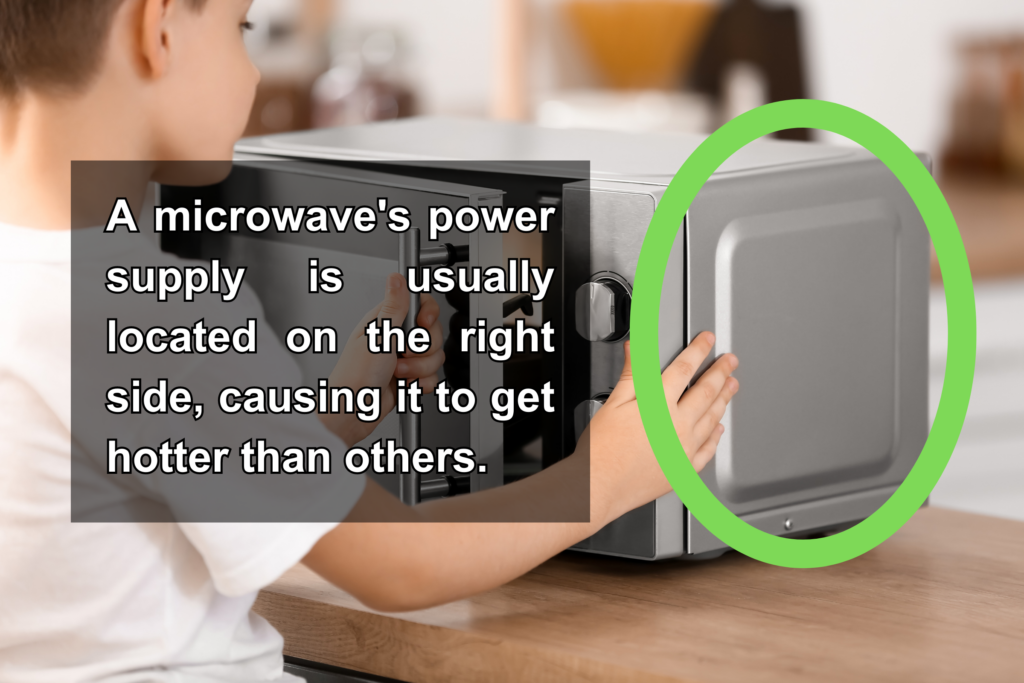
The top and right sides of the microwave (with the door facing you) get hottest when cooking, but all sides can get warm. Heat rises and causes the top of the microwave to get hot, and the magnetron tube and power supply on the right side also generate heat, which can make that side hot to the touch.
It’s normal for these areas on your microwave to get hot, especially if you’re cooking for several minutes at a time or you are using a mini microwave that doesn’t have a lot of ventilation options built in.
To minimize heat buildup, the microwave’s cooling fan runs as the microwave cooks to improve airflow and distribute heat evenly for better cooling.
What should you do if your microwave is hot on the outside?
Microwaves get hot after cooking for a long time. They should not get hot after using them for less than a minute. What should you do if yours does?
If your microwave is hot on the outside, don’t worry, it’s normal. Microwaves get hot on the outside from heat transfer after cooking for long periods. However, if your appliance is hot to the touch after cooking for less than a minute, turn it off, unplug it, let it cool down, and call a repair technician.
Unplugging a microwave because it’s hot on the outside after cooking for minutes at a time is generally unnecessary. All microwaves get hot externally, especially if used for prolonged periods.
If you have any concerns about the safety of how hot your microwave is, switch it off and contact the manufacturer or a qualified technician.
What causes a microwave to overheat?
In some cases, a microwave can overheat and shut itself off. Why does this happen?
Using a microwave on high for several minutes or using it in a poorly ventilated space can cause it to overheat. The parts inside the appliance can get too hot, which activates the automatic shut-off switch to prevent fires and other safety concerns.
Modern microwave ovens have an inbuilt safety feature that automatically switches off the power in the event that there is excessive heat buildup to protect the microwave from damage or electric shock.
The microwave can be used again after it has cooled down sufficiently.
We’ll cover more on how to prevent this in the next section.
How to stop a microwave from getting hot on the outside (4 prevention measures)
It’s normal for your microwave to get hot on the outside, but a few factors can cause it to get hot when it shouldn’t.
Here are a few quick tips to keep yours from getting hot or overheating.
1. Put it somewhere in the kitchen with good ventilation
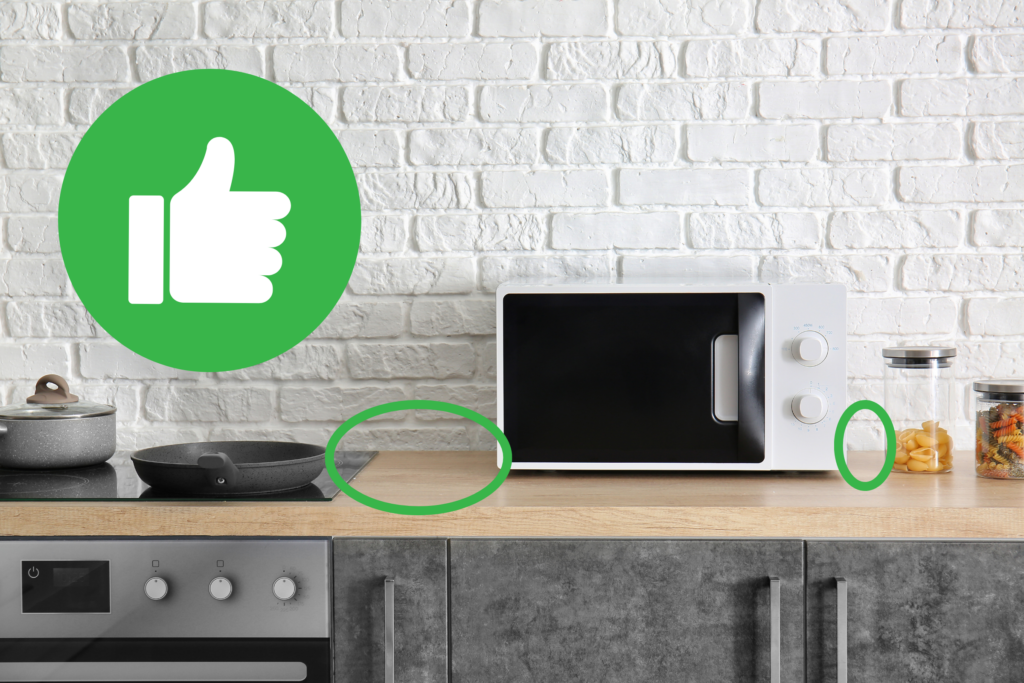
The first thing you should do, before even using your microwave, is place it where it will get good ventilation. Heat escapes from the back and underneath the microwave. Because of this, you should put it in a spot that allows the heat to circulate without blocking it.
Some manufacturers recommend at least four inches of space around the oven sides and eight inches from the microwave top to the next surface, except for some over-the-range devices.
For example, do not place objects on top of it (countertop oven). Ensure that no objects are blocking the vents or that it is not set right next to the wall to allow proper cooling.
2. Don’t use the microwave next to a stovetop or oven
Using the microwave next to the burners on a stove will cause the outside of the microwave to get hot. Although not particularly an issue when you’re not using the microwave, using both simultaneously can cause the microwave to overheat.
3. Adjust the microwave’s temperature or power settings
Turn down your microwave’s power settings to minimize how hot the outside gets. Reducing the temperature at which food cooks can significantly reduce heat transfer to the microwave’s casing.
Usually, thicker foods like meats require a longer cooking time with lower temperatures inside a microwave.
4. Heat or reheat food in intervals
Another tip is to use the microwave for shorter periods. Cooking or reheating foods for min end will inevitably make the outside of your oven hot and can even burn your food. While this isn’t necessarily a safety issue, it can reduce heat transfer and prevent it from getting hot.
For example, instead of reheating a bowl of soup for two minutes straight, reheat it in shorter intervals (30-60 seconds) and stir in between. This will prevent the microwave from overheating and heat your food more evenly.
Summary of Why your microwave is hot on the outside
The outside of a microwave can feel hot to the touch if it’s been used to cook at high power levels for an extended period. Under these circumstances, it is normal.
To prevent unnecessary buildup, ensure it is installed in a well-ventilated area away from appliances that give off heat.
If, in spite of following the steps above, it is still unnecessarily hot or you are not comfortable with its performance, immediately consult the microwave oven supplier for assistance.
Why does my microwave have a hot inside spot?
Your microwave has a hot spot because some materials inside absorb heat better than others, causing external hot spots.
Why is my microwave hot when not in use?
Your microwave is likely hot when not in use because it’s next to another heat source or cooling down after use. Move it to a more ventilated space.
What are the signs that a microwave is going bad?
Odd odors, shortages, excess external heat, a faulty keypad, and uneven cooking are common signs that your microwave is going bad.
Let Us Know How We’re Doing!
Did this expertly prepared resource answer your question?
Do you have another question about home maintenance, home improvement projects, home appliance repair, or something else?
Get more information, send in questions and keep the discussion going by contacting the I’ll Just Fix It Myself company customer service team at at 1-800-928-1490 or Email us at [email protected]
