
Can You Recharge a Window Air Conditioner? (2 Safe & Cheap Methods)

If your window air conditioner isn’t working as well as it should, it may be time to get a new one. But what if you want to save a little money by fixing the old one? Can you recharge a window air conditioner?
You can recharge a window air conditioner with coolant if some has slowly leaked out over time. Add coolant to your window air conditioner through the low-pressure inlet port or by installing a bullet piercing valve, if necessary.
Keep in mind that without HVAC certification, this process is not recommended. That said, if you do your research and exercise caution, this is an alternative to purchasing a new window AC unit.
What is an Air Conditioner recharge?
We’ve all struggled with the heat when the AC stops being enough to cool off. When an air conditioner gets old, it can start to lose its cooling power. This can happen to any type of AC but is most common in car AC units.
While there are other possible reasons it’s not working as well, one of the biggest reasons is that the AC is running low on refrigerant. When this happens, you can fill it back up and effectively “recharge” the AC.
Can You Recharge a Window Air Conditioner?
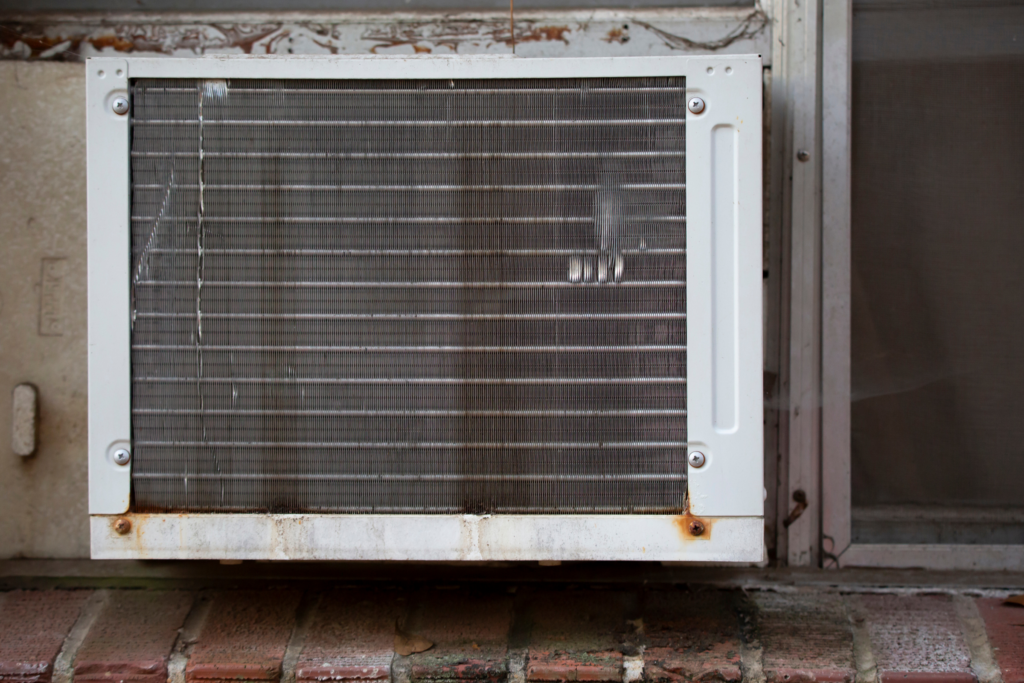
Yes, you can recharge a window air conditioner with refrigerant and make it work just as before. However, window AC units are usually fully sealed, so if you’re low on coolant, it means there’s an underlying problem.
One of the best ways to check if there is a coolant problem is to measure the difference in temperature between what it should be and what it is.
To check the temperature difference, use a digital thermometer to measure the temperature of the air coming out of the AC and the room. Then, calculate the temperature difference between your room and the window AC output airflow. If the difference is between 10-20 degrees Fahrenheit, it’s refrigerant leakage.
If the difference is greater than 20 °F or less than 10 °F, it is not a coolant issue. If it’s greater than 20 °F, you should be able to fix it by cleaning the unit.
How often do you need to recharge a window air conditioner?
If the window air conditioner is well maintained and never suffers an accident, you won’t have to recharge it for its whole lifespan. Unfortunately, life is never so perfect. Even so, you shouldn’t have to recharge a window air conditioner very often.
Recharging a window air conditioner is not a regular thing. It should only be done if there is a problem with the unit. You have a persistent leak if you find that you’re replacing coolant often.
How to Recharge a Window Air Conditioner
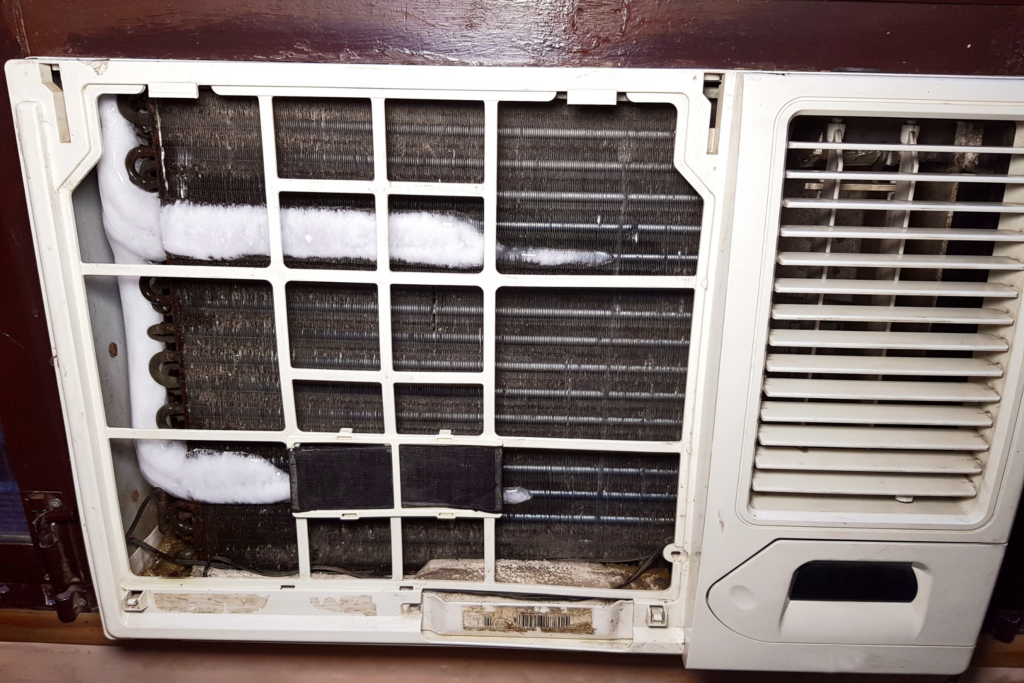
Recharging a window AC unit isn’t challenging, especially if you’ve worked with HVAC refrigerant before, but you should carefully read these instructions to avoid errors.
The most important aspect is to get the right refrigerant. AC units run off of one type of coolant, and they cannot be mixed. Consult the unit’s label or owner’s manual to determine the type of coolant it uses.
Unfortunately, window air conditioners are not designed to be recharged–there are no access valves. So, before using either method, you’ll need to install one. This also means the coolant level will only decrease if there is a leak.
Always check over the unit for any leaks and fix those before adding more refrigerant.
Once this is done, there are two methods to recharge your window AC. The first is a quick and dirty method requiring some trial and error.
The second is a more exact method but requires more effort and can involve waste disposal.
Ensure you wear your protective gear, like gloves and eyeglasses, before starting the following process. This is because the refrigerant is harmful and can lead to frostbite if it comes into contact with your skin.
Materials Needed to Recharge a Window Air Conditioner
- Gloves
- Protective eyeglasses
- Screwdriver
- Leak detector
- Bullet piercing valve
- HVAC gauges or recharge hose
- Refrigerant (unit specific)
How to install a bullet piercing valve
Before starting either method, you’ll need an access valve. The best way to install one is to use a bullet piercing or tap valve. Be sure to measure the coolant line to get the right size valve.
- Start by cleaning the section of the line you’re installing the valve on.
- Place the back of the bullet valve on the line and hold it in place.
- Place the other side of the valve against the back.
- Begin screwing the two halves together with the screws on the edge of the valve. Switch the screw you are tightening so that they are tightened evenly.
- Screw the center screw to pierce the line.
How to detect a leak in a window AC unit
Before starting the whole process, unplug your AC from the wall socket. It will give you an easy time inspecting the unit to identify where the real problem is.
If you’ve got the old window AC, you’ll only slide its front ends out of place, and it will lay bare the components inside the unit. However, the newer ones require you to open them using a screwdriver. You can use the user manual to guide you through this process.
The first thing you need to do after opening your unit is to identify where the leak is. You can do this through visual inspection, using soap or nitrogen. Using nitrogen is a method that should be done by experts only.
Using soap: Make a mixture of water and soap, then lubricate the whole surface of the refrigerant transmission gear, like the hose or pipe. Switch on your unit and monitor where there will be bubble formation. That will be a leak area.
Alternatively, you can use leak detectors that sniff out refrigerant leakage. It will produce a fast audible beep or a visual signal when approaching a coolant leak.
You’re likely to find leaks around the joints of the window AC. When you find them, you can patch the hole or replace the entire line.
Recharge a Window Air Conditioner Using the Quick Method
The quick way to recharge a window air conditioner is to add coolant in small amounts until it starts working again. Unplug the unit when working on it, but stay near a power source as you’ll turn it on and off.
After repairing the leaks and installing the service port, you need to recharge your window air conditioner. You will require an HVAC gauge and the right type of refrigerant to do this. Read the air conditioner’s service label to know the kind of refrigerant to use.
If it’s R410a, you can buy it online at any air conditioning supply shop. Then, hook up the gauge to the service port and the refrigerant tank. While doing so, ensure you understand the recommended PSI limit to avoid overfilling your unit.
- Secure the refrigerant to the hose.
- Then, secure the recharge hose to the bullet valve.
- Finally, briefly open the valve on the recharge hose to enable the refrigerant to get into the AC.
- Test the AC by running it for 5 to 10 minutes.
- If it is not working as desired, repeat steps 1 through 4.
Note that the refrigerant pressure requirement for every HVAC system varies according to the temperature. This means each window air conditioner requires the correct pressure to work effectively. You should not overfill your system.
If your unit has a low refrigerant level, it will result in low pressure, which affects your AC’s functionality. On the other hand, applying too much refrigerant will result in high pressure, causing the machine not to work.
Since this is a low-pressure line, using no more than 35-40 PSI is recommended before testing if your AC is working again. But if there’s no change, slightly increase the pressure until your AC cools your environment.
Recharging your window air conditioner using the exact method
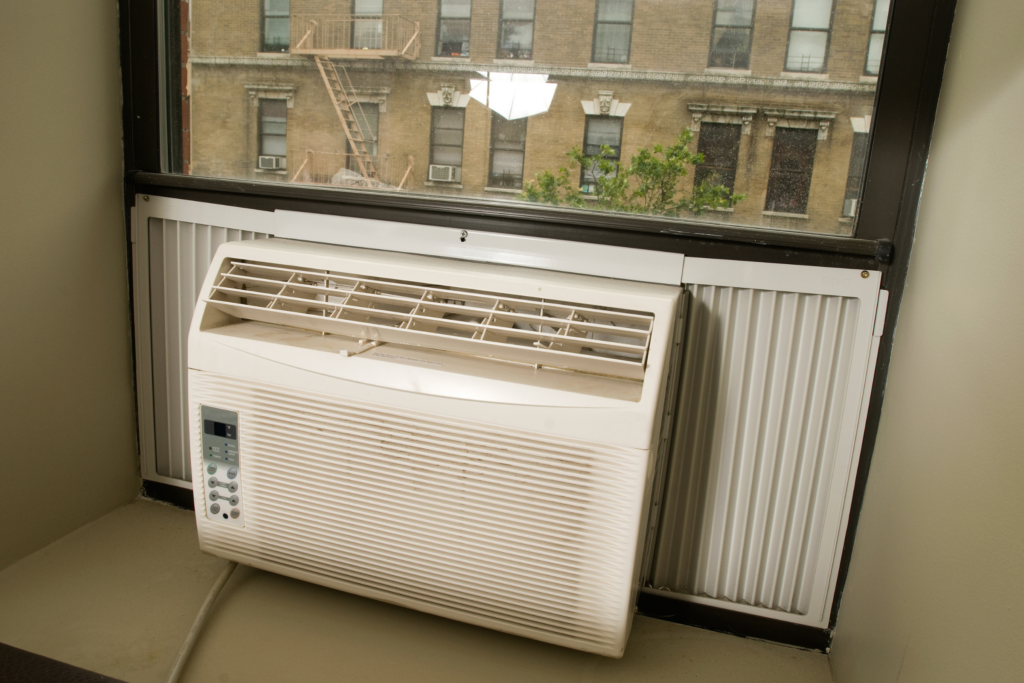
The exact method for recharging a window AC requires you to drain the unit of coolant. This allows you to refill it with the exact amount of refrigerant required by the AC unit. It is a much more precise method, but it means you need to either reuse the coolant or dispose of it.
In addition to the above materials, you will also need a vacuum pump and a recovery container for this method.
- Hook up the HVAC gauge & hose to the new bullet valve.
- Hook up the hose to the recovery container.
- Turn on the vacuum pump and open the gauges.
- Wait until all of the coolant has been drained.
- Remove the vacuum pump.
- Attach the refrigerant to the AC unit.
- Add the correct weight of coolant to the unit.
- Disconnect the various lines and seal everything back up.
If you want to reuse the coolant you pull out, you need to weigh it so that you know how much to add from the fresh coolant.
Summary of recharging a window Air conditioner
Can you recharge a window air conditioner without involving an HVAC technician? Yes. This is a simple process you can do at home without any assistance from a technician. However, you need to be put on protective gear to avoid injuries.
If you’re doing this for the first time, you must be careful since some components are dangerous. Recharging your window air conditioner will help you reduce the costs of hiring an expert to do it for you. It will also save you from buying another device whenever your system fails to work, saving money in the long run.
Frequently Asked Questions (FAQ)
How do you recharge a window AC unit?
You can recharge a window AC unit by installing a service valve and carefully adding coolant.
Can you put Freon in a window air conditioner?
Yes, you can put Freon in a window AC unit if it is the right type for your unit.
How much does it cost to recharge a window air conditioner?
It can cost anywhere from $100 to $200 to recharge a window AC, depending on the type of refrigerant.
Why is my window AC not cooling?
It could be due to a coolant leak, the compressor shutting off, or faulty parts.
Let Us Know How We’re Doing!
Did this expertly prepared resource answer your question?
Do you have another question about home maintenance, home improvement projects, home appliance repair, or something else?
Get more information, send in questions and keep the discussion going by contacting the I’ll Just Fix It Myself company customer service team at at 1-800-928-1490 or Email us at [email protected]
