
Why Ceiling Fan Only Works When Light Is On? – Top Reason & Best Solution

A ceiling fan helps circulate cool air in the room, enabling you to enjoy staying indoors. The ceiling fan does this with the help of different parts, which work harmoniously to give you the desired cool air. If your ceiling fan has a lighting kit, it should have pull cords or switches for the fan and lighting, which turns them on and off.
If you pull the cord while turning on the lights, the electricity passes through the fan before reaching the light bulbs. But this doesn’t mean your lights should be on when you turn on the fan or vice versa.
Remember, both should have a control mechanism that helps you do this with ease. So, what can make a ceiling fan only works when the light is on? It could be a bad wiring connection, or the fan and light share a single switch. Read on and understand more about this.
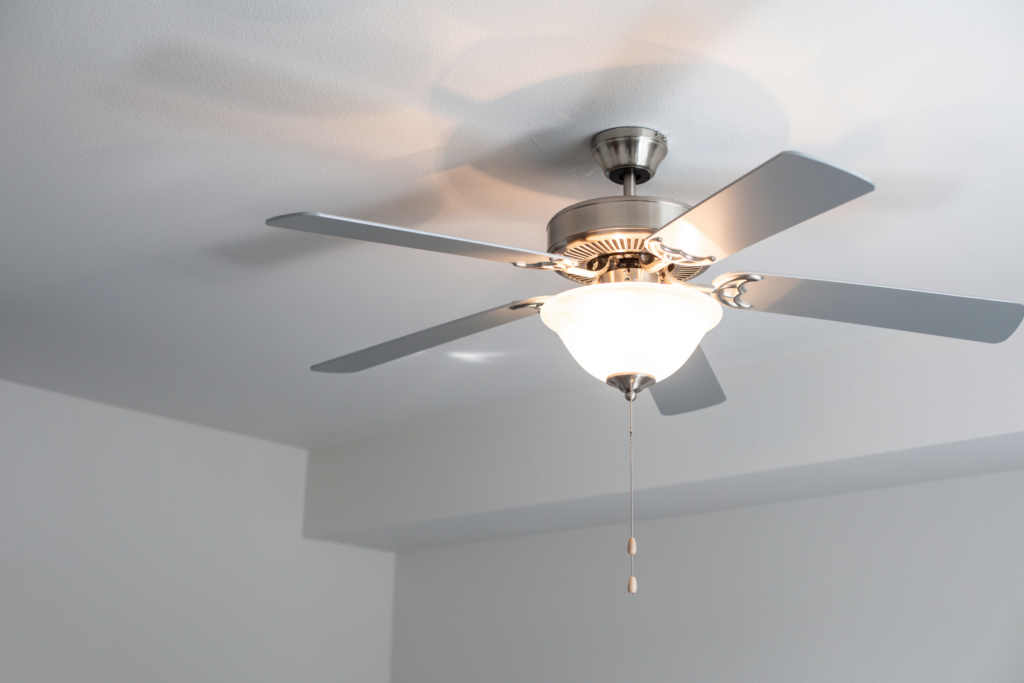
Why Ceiling Fan Only Works When Light Is On?
The Ceiling Fan Only Works When the Lights are On phenomenon is a common problem with ceiling fans. There are a few things that can be done to try to fix the problem. One is to replace the wall switch with a dimmer switch. Another option is to buy a new ceiling fan that has a remote control.
Your ceiling fan should be able to work without the lights turning on. But if this doesn’t happen, it could result from the following:
- The ceiling fan and lights are using the same witch
- Wrong wiring connection
- Broken pull cord inside the fan
- Faulty switch
. Below is a table summarizing the key points from the article:
| Problem Category | Potential Causes | Suggested Solutions |
|---|---|---|
| Switch Issues | The fan and lights are using the same switch. | 1. If the pull cord is re-attachable, reattach it. 2. Replace the pull cord following the detailed steps in the article. |
| Switch Issues | Faulty switch | 1. Replace the faulty switches to control light and fan separately. |
| Wiring Issues | Wrong wiring connection | 1. Check and correct the wiring connections between the fan, lights, and switch. 2. Ensure proper wire count (3 instead of 2). |
| Wiring Issues | Single hot wire powering both switches | 1. Reconfigure wiring to isolate the switches. |
| Internal Fan Issues | Broken pull cord inside the fan | 1. If the pull cord is re-attachable, reattach it. 2. Replace the pull cord following detailed steps in the article. |
| Fan motor | Fan motor drawing too much power | 1. Adding a light bulb into the circuit might reduce the load on the fan motor. |
I hope this table helps you quickly understand the different problems and solutions related to the issue of a ceiling fan only working when the lights are on.
The Fan and Lights Are Using the Same Switch
When you buy a ceiling fan, you’ve got to install it where there’s an existing wiring connection for it to work. However, the installation process largely depends on the kind of ceiling fan you’ve got.
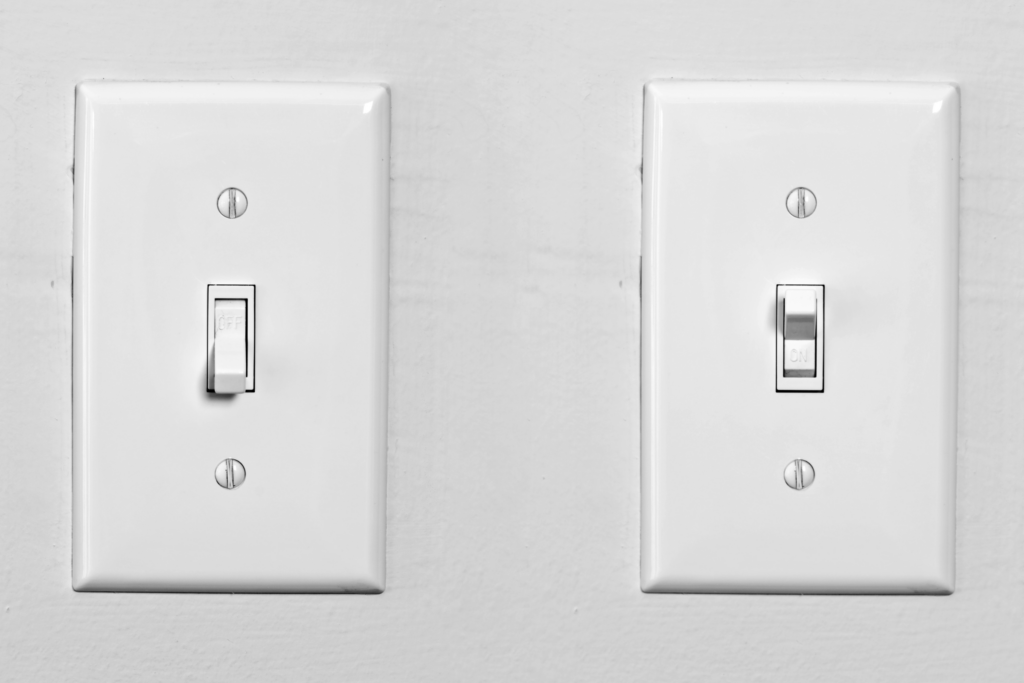
Remember, you can wire a ceiling fan with lights to different switches or not. With two switches, it means you’ll control each independently without interfering with either of them. But then there are instances when you can have the ceiling fan and lights on one switch.
When you opt for this, you’ve got to ensure that the light switch can bear a load of both the light and fan. Use a 20-amp switch or 15-amp switch to do this. When you’re using a single switch to power on the fan and light, both will turn on at ago. This means your fan will only work when the lights are on.
To stop this, you can use the pull chains on the fan to have both work independently. Pull the cord switch for the fan if you want it to run. When you don’t want the fan to work but require the lights pull the cord for lighting. Alternatively, you can change the type of switch you’re using to have the fan’s switch running independently from the light.
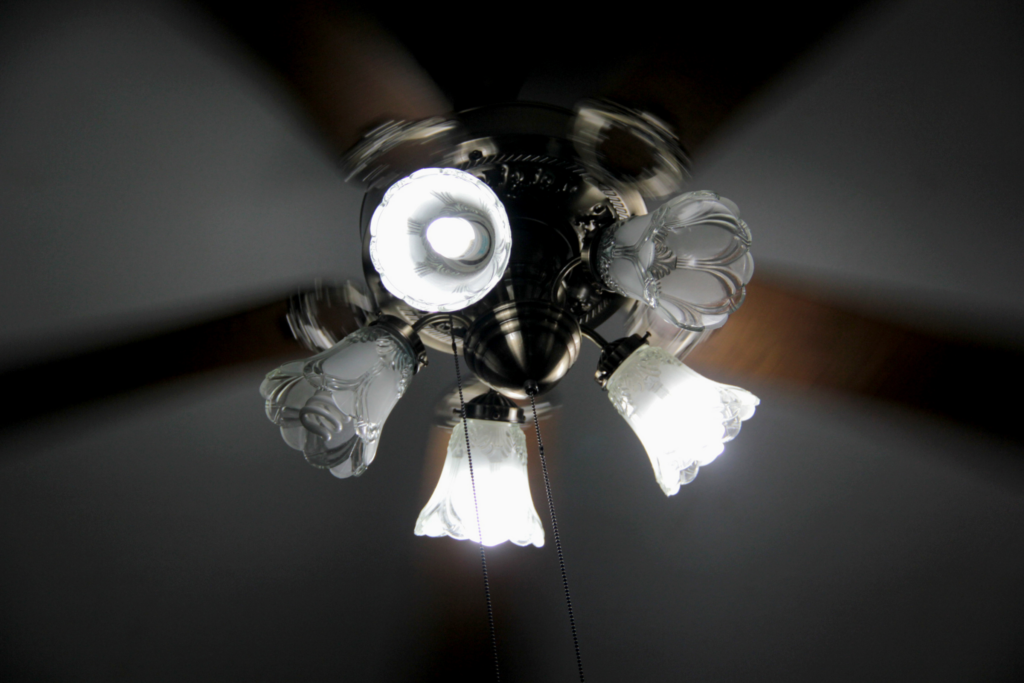
Wrong wiring connection
You need to do proper wiring to enable the fan and lights to run without challenges. But if there’s a bad connection or wiring, the fan and light will have to run concurrently. You need to connect the ceiling fan to the right white wires to run smoothly. But most ceiling fans have red wires running from the electrical box and connect with the blue wires from the light kit. If this connection is not done well, the fan will work as the lights are on.
The fan switch should also have enough wires running to the light. If it has two wires instead of 3, it could be the problem.
You need to check the wiring connection between the fan, lights, and switch to ensure everything is running the right way. If you realize a problem, change the wiring connection and have your lights or fan on when needed.
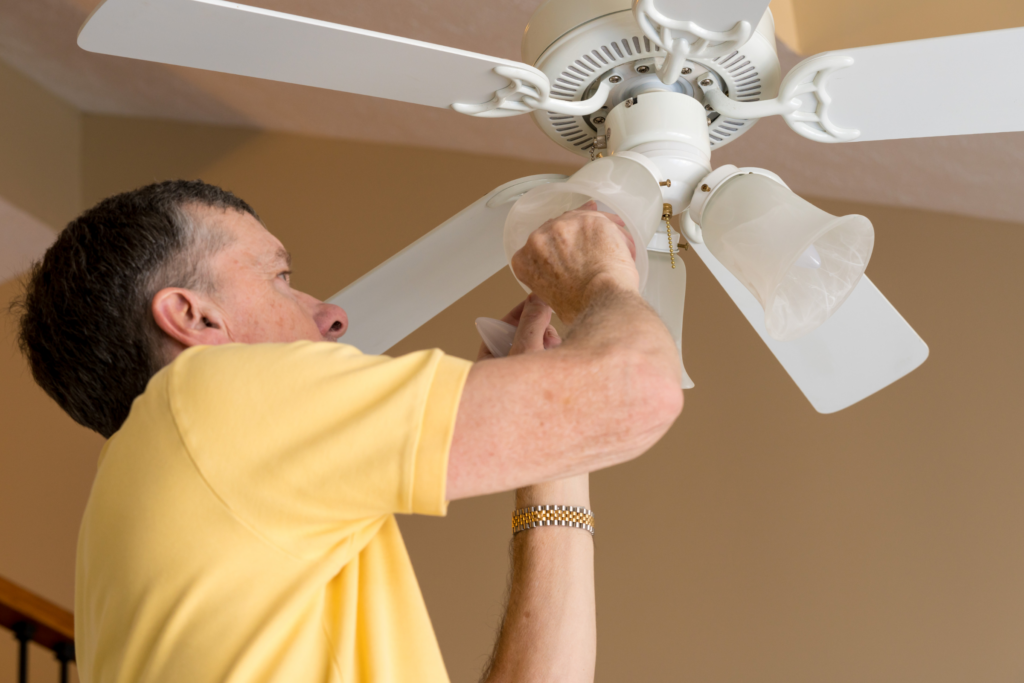
A Broken Pull Cord Inside the Fan
Another reason your ceiling fan may work only when lights are on is a broken pull cord. Pull cords help turn the fan and lights on and off when using a single switch. When the pull cord for the fan is broken, if it’s on or in high settings, it will stick in that position.
So anytime you turn on the lights, the fan will also run, which can be inconvenient.
You can stop this by replacing the pull cord. But if the pull cord is re-attachable, the better (this depends on the model of fan you’re having). This is if the pull cord breaks outside the fan housing where it’s visible and easily accessible.
Note that repairing the chain break on the ceiling fan should be done if it is ½ inch outside the fan housing. If you have another chain extension, add it to the ceiling fan by pushing it well to have it stick to the connector.
However, if you can see the pull chain (ceiling fan chain), it shows it’s broken inside the ceiling fan pull switch. So, you need to replace it to have it work as usual.
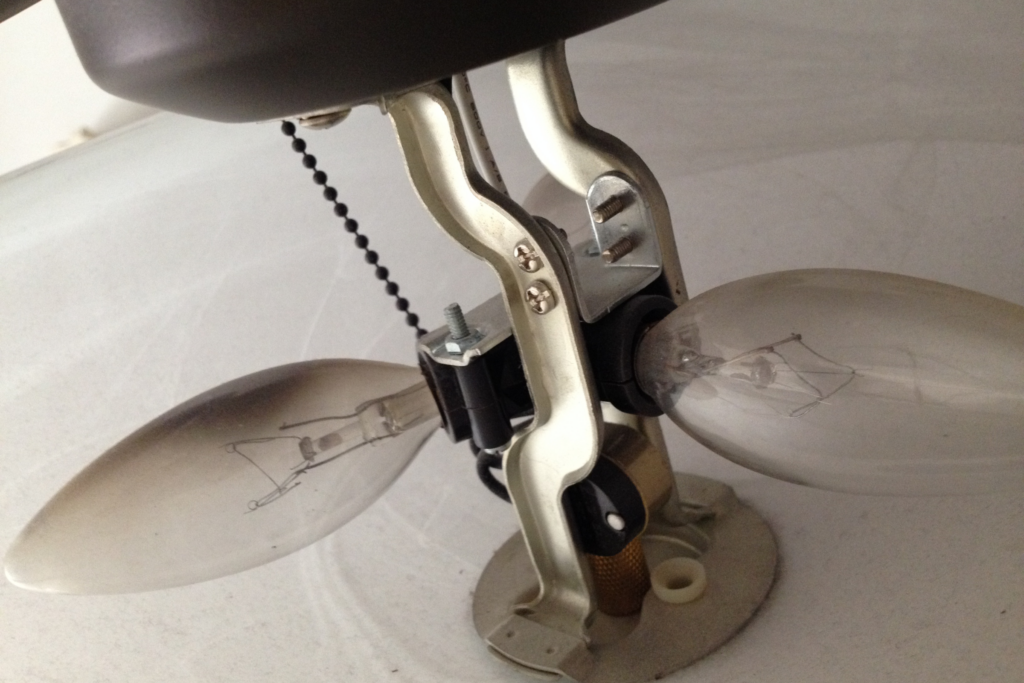
How To Replace a Broken Pull Cord Inside the Fan Housing?
You can replace the pull cord if it breaks inside the fan housing by:
- Detach the metal collar where the pull cord extends. You can try doing this with your fingers by turning it anticlockwise. If you’re unable to do this with your bare hands, use pliers while wrapping a soft cloth around the metal collar to prevent it from being damaged.
- After that, remove the light bulbs on the ceiling fan. Use a screwdriver to achieve this with ease while holding the detachable lower part of the fan.
- Remove the ceiling fan chain switch, which is a small plastic. As you do that, you’ll be able to spot the broken pull cord. Gently pull it out of the fan.
- Then remove the wires attaching the fan’s chain switch to the fan’s base using a wire stripper. But give a 2-inch allowance that you’ll reattach the new pull cord to.
- Connect the new pull cord to the ceiling fan through the three or four wires. Carefully twist the wires, then cover them with a plastic wire nut.
- Reconnect the pull cord into the ceiling fan base through the hole in the casing.
- Finally, reassemble the fan and test if the pull cord is working. Pull the cord gently to test if the fan can work when needed.
A Faulty Switch
Sometimes this problem can result from a faulty switch. This is if you’re using two switches but with a single hot wire (black wire) to power both.
When you do this, you’ll have to strip the insulation of the longer wire to both switches. Then loop the exposed wire around the first switch’s hot terminal. After that, connect the striped edge to the second switch. Doing this is a way of getting a simpler wiring scheme and eliminating the wire nuts.
However, if any of the switches is faulty, it will cause such a problem. This will require you to replace the switches to have control of the light and fan separately.
One possible reason why a ceiling fan only works when the light is on is that the fan is connected to the light switch. When the light switch is turned on, the circuit is completed, and the fan turns on.
Another possibility is that the fan motor is drawing too much power from the outlet when it’s running on its own, and adding the light bulb into the circuit takes some of that load off of the fan motor.
Frequently Asked Questions(FAQs)
Can a ceiling fan and light be on the same switch?
A ceiling fan and light can be on the same switch if the fan has a light kit installed. The switch will need to be a three-way switch so that the fan and light can be controlled from two different locations.
Why does my ceiling fan only work sometimes?
The ceiling fan likely only works sometimes because of a faulty switch. When the switch is working properly, it completes the electrical circuit that powers the fan. However, if the switch is faulty, it might not be able to complete the circuit, which would cause the fan to stop working.
Additionally, if there is too much dust or debris on the switch, it might not be able to complete the circuit either.
How do you reset a ceiling fan?
There are a few ways to reset a ceiling fan. One way is to use the pull chains. Another way is to use the remote control. If neither of those work, then you can try unplugging the fan and plugging it back in.
Is the fan safe to use when the light is off?
The fan is safe to use when the light is off because it doesn’t have any electrical wiring that would create a fire hazard. The fan blades are also made from a non-flammable material, so there is no risk of them starting a fire.
Can the ceiling fan run off a light circuit?
No, the ceiling fan cannot run off a light circuit. Ceiling fans typically require a dedicated circuit to function properly, as they can draw a high amount of current. Connecting a ceiling fan to a light circuit may overload the circuit and cause a fire.
How do you control a ceiling fan with one light switch?
To control a ceiling fan with one light switch, you must use a three-way switch. With a three-way switch, you can control a light fixture from two different locations. The first location is the switch that is closest to the light fixture. The second location is the switch that is farthest from the light fixture.
Can I connect red and black wires together ceiling fan?
When wiring a ceiling fan, it is important to remember that the black wire is the hot wire and the red wire is the neutral wire. Connecting the black and red wires together can create a dangerous situation, as it can cause an electrical short.
Why does the fan stop working after a few minutes?
The fan’s motor may have been overloaded and ceased functioning as a result.
How long do ceiling fans last?
Ceiling fans typically last around 10 years. However, this can vary depending on the quality of the fan, how often it is used, and the environment in which it is used. Ceiling fans are exposed to a lot of dust and other particles, which can cause them to wear out more quickly. Fans that are used frequently or in a dusty environment may only last for 5 or 6 years.
Can two switches control one ceiling fan?
Yes, two switches can control one ceiling fan by providing two separate paths for the current to flow. This allows for the independent operation of the fan from each switch. Typically, one switch is used to turn the fan on and off, while the other switch is used to adjust the speed of the fan.
AT THE END
There are instances when you don’t want the ceiling fan to run while the lights are on and vice versa. If you’re using a single switch for both of them, the pull cord can be handy in this case. However, if you’re using a single switch without the pull cord, the fan and lights will be on at ago.
Another reason for such an occurrence is that you made the wrong wiring connection, making the current not flow in the right direction. Additionally, this problem can be because of a faulty switch if the two switches share a wiring connection.
You can solve most of these problems easily without any challenges if you’ve good electrical knowledge. While doing this, ensure your safety comes first and follow instructions to avoid errors. If you’re not able to do it alone, call a professional to help out.
Read Also:
Let Us Know How We’re Doing!
Did this expertly prepared resource answer your question?
Do you have another question about home maintenance, home improvement projects, home appliance repair, or something else?
Get more information, send in questions and keep the discussion going by contacting the I’ll Just Fix It Myself company customer service team at at 1-800-928-1490 or Email us at [email protected]
